
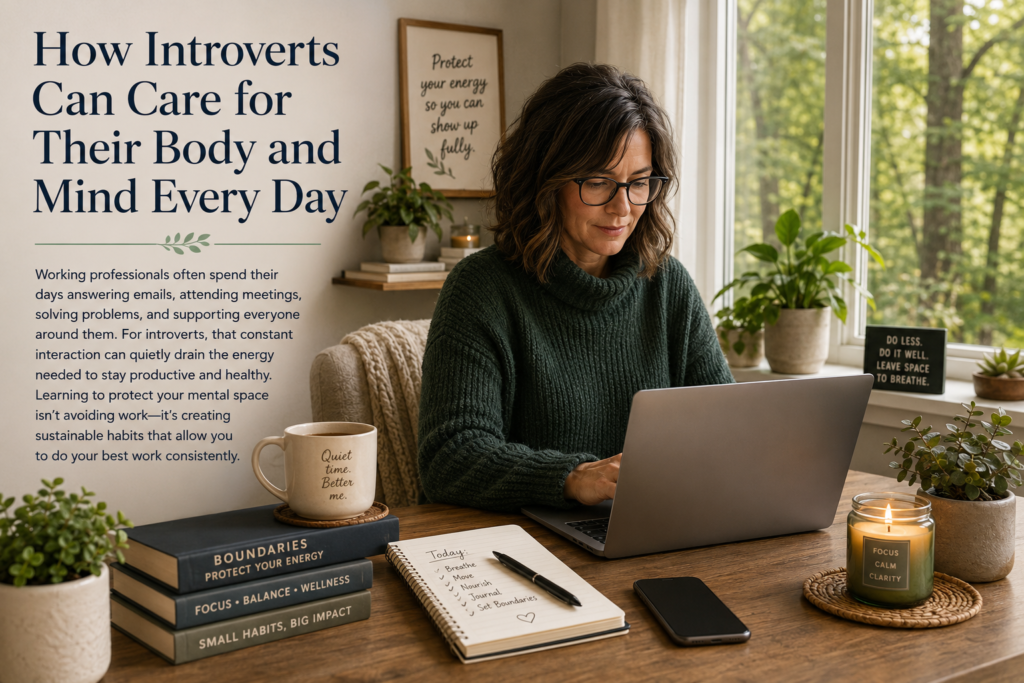
From time to time, we like to share insights from our guest contributors. Although this author is usually featured on Herbal Journal, this article immediately struck us as something many of our The Best VA readers would appreciate. If you’ve ever felt mentally drained by the demands of work while trying to balance your own well-being, we think you’ll find some valuable ideas here.
~*~
For working professionals, students, and caregivers with introverted personality traits, daily self-care can feel mismatched to a world that rewards constant availability. Sensory sensitivity, the need for quiet recovery time, and introverted social energy management often get mislabeled as laziness or poor motivation, creating a steady sense of being “behind.” The core tension is real: pushing through depletion may keep life moving, but it quietly drains physical and mental well-being for introverts. Boundary setting for introverts isn’t a flaw to fix; it’s a form of body-and-mind care that makes consistent wellness possible.
Daily Self-Care for Introverts
- Choose mindful self-care practices that match your energy and protect your mental space.
- Use introvert-friendly physical health strategies to support your body without draining your social battery.
- Practice simple mental health techniques to reduce stress and stay emotionally balanced.
- Build in introvert-friendly relaxation methods and solo hobbies to recharge consistently.
- Try a realistic digital detox to lower overwhelm and create more quiet, restorative time.
Choose Low-Pressure Learning Paths That Protect Your Energy
Some self-care choices support your long game, too, especially when they help you grow without draining your social battery.
For many introverts, in-person learning can come with constant pressure to network, speak up on the spot, and manage busy, stimulating environments. Earning an online degree can ease that load by letting you learn in a more comfortable setting, with flexibility to engage when your energy is highest and move through coursework at a pace that helps you do your best work. If you’re exploring leadership in healthcare, a master’s degree in health administration can help you build your knowledge and expertise as a leader, and a distance MHA program can offer that path without requiring ongoing in-person attendance.
Build a Daily Body-and-Mind Routine That Sticks
This simple routine turns “take care of yourself” into a few repeatable actions that protect your energy and support your health. It matters because the best self-care is the kind you can do on an ordinary day, even when life is busy.
- Start with 2 minutes of breathing and mindfulness
Start with slow, steady breaths and place your attention on one anchor: air moving, feet on the floor, or sounds in the room. Keep it short so it feels doable, then extend only if you want to. A 35% drop in stress suggests this small practice can be worth protecting. - Choose one solo movement you can repeat
Pick a low-friction option like a walk, gentle yoga, or stretching, and set a “minimum version” you can do even on tired days. The goal is consistency, not intensity, since incorporating physical activity can support both mood and physical well-being. Tie it to an existing cue, like right after coffee or before a shower. - Cover nutrition basics with one steady meal pattern
Choose one nutrition habit to stabilize your day, such as adding protein at breakfast, including a fruit or vegetable at lunch, or drinking water with each meal. Keep it practical by using simple building blocks you already like, not a complicated plan you will resent. When your meals are more consistent, your energy and focus often feel more predictable too. - Journal for clarity in a 5-line check-in
Write five lines: what you feel, what you need, what you can control today, one small action, and one kind statement to yourself. This helps you process internally without needing to talk it out, which can be a relief when your social battery is low. End by choosing one next action that takes 10 minutes or less. - Set one clear boundary for the next 24 hours
Choose one limit that protects recovery time, such as a reply window for texts, a no-meetings block, or a polite “not today” script you can reuse. Make it specific and time-bound so you do not have to renegotiate it all day. Boundaries turn self-care from a hope into something you can actually keep.
Small, steady choices add up, and you can adjust the routine without quitting it.
Everyday Self-Care FAQs for Introverts
Here are quick answers to the worries that come up most.
Q: What if social plans drain me so much that I skip self-care entirely?
A: Treat recovery as a real need, not a personal flaw. Pick a “reset menu” for after social time: water, a quick shower, five minutes of quiet breathing, and an early bedtime. Keeping the steps tiny helps you restart instead of spiraling into guilt.
Q: How can I manage energy when my schedule changes day to day?
A: Use a minimum baseline you can do even on chaotic days, like two minutes of stillness and one nourishing meal. Essential activities count as self-care when you choose them on purpose. If you have extra capacity, add one optional upgrade, not a whole new routine.
Q: Why do I feel behind when I compare my habits to more outgoing people?
A: Different nervous systems need different inputs, so the goal is not to match someone else’s pace. Track what improves your mood and focus for the next few hours, then repeat that. Many people report feeling mentally stronger when they practice self-care, and your version is allowed to be quiet.
Q: How do I stay consistent without turning this into perfectionism?
A: Choose a frequency you can keep, like four days a week, and plan for “messy wins.” If you miss a day, do a 60-second restart and move on. Consistency is built by returning, not by never slipping.
Q: Can I prioritize alone time and still maintain relationships?
A: Yes, when you make connections more intentional. Try one low-effort touchpoint, like a short voice note or a planned coffee once a week, then protect your downtime before and after. Clear expectations reduce resentment on both sides.
Small, kind adjustments are how introverts make self-care last.
Build a Steady Introvert Routine for Daily Body-Mind Wellness
For introverts, the challenge isn’t knowing self-care matters, it’s protecting energy and staying consistent without guilt when life gets loud. A sustainable approach is to treat wellness as small routines supported by clear boundaries and reflective self-care practices, not an all-or-nothing project. Over time, that steady rhythm builds sustained body and mind wellness: better mood stability, more reliable energy, and long-term self-care benefits you can actually feel. Small routines, protected by boundaries, create the strongest kind of self-care. Pick one practice this week, set one simple boundary around it, and do a quick weekly check-in to track the payoff. That’s introvert empowerment through routine, and it’s how health becomes a source of resilience, not another demand.
Dylan Foster
Health Well Wise


Leave a Reply