
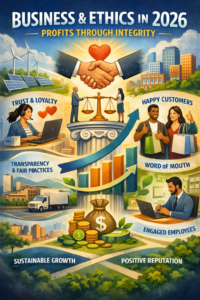
As I enter my 30th year in business, I am reminded that ethics = business growth. What do I mean?
In 2026, ethics in business is no longer a “nice-to-have” or a branding buzzword—it’s a measurable driver of income, loyalty, and long-term growth. Customers, employees, and partners are more informed, more selective, and more willing to walk away from businesses that don’t align with their values. At the same time, they are more willing than ever to invest—with their money and their trust—in companies that operate with integrity.
Ethics has become a competitive advantage. And businesses that understand this aren’t just surviving; they’re growing.
The New Business Environment: Transparency Is the Default
Technology has changed the power balance. Reviews are instant, supply chains are visible, and internal practices don’t stay internal for long. In 2026, transparency isn’t something businesses opt into—it’s something they manage intentionally or suffer from accidentally.
Ethical businesses proactively communicate how they treat employees, source materials, price products, and make decisions. This clarity reduces friction in buying decisions. When customers don’t have to wonder, “Is this company cutting corners?” they move faster from interest to purchase.
Trust shortens the sales cycle. And shorter sales cycles mean higher revenue efficiency.
Ethics Builds Customer Loyalty (Which Lowers Marketing Costs)
One of the most expensive mistakes businesses make is constantly chasing new customers while ignoring retention. Ethical practices—fair pricing, honest marketing, responsive customer service, and accountability when mistakes happen—build emotional loyalty.
In 2026, customers don’t just buy products; they buy alignment. When people feel respected and fairly treated, they return. They recommend. They defend your brand publicly.
That word-of-mouth is not only more credible than paid advertising—it’s free. In my 30 years in business, I have advertised formally, only twice.
Ethics quietly reduces your cost per acquisition while increasing customer lifetime value. That’s a direct income impact.
Employees Perform Better When Ethics Are Clear
Revenue doesn’t grow without people. Businesses that operate ethically attract higher-quality talent and keep them longer. Clear values reduce internal conflict, burnout, and costly turnover.
When employees (or contractors/subcontractors) trust leadership, they:
- Make better decisions without constant oversight
- Represent the brand more confidently
- Serve customers with authenticity rather than scripts
In 2026’s tight labor market, ethical clarity is a retention strategy. And retention protects institutional knowledge, productivity, and profitability.
Ethical Brands Command Premium Pricing
Price sensitivity decreases when trust increases. Customers are more willing to pay premium prices when they believe a business is fair, responsible, and aligned with their values.
This doesn’t mean ethics is about being expensive—it’s about being worth it. Transparent sourcing, fair wages, honest claims, and responsible growth give customers a reason to choose you even when cheaper options exist.
Ethics shifts competition away from price wars and toward value differentiation—where margins are healthier.
Risk Reduction Is Revenue Protection
Unethical shortcuts often look profitable in the short term, but they carry hidden costs: legal issues, reputation damage, public backlash, and internal instability. In 2026, these risks escalate faster and spread wider than ever.
Ethical decision-making acts as a form of insurance. It protects revenue streams by minimizing volatility and avoiding crises that can erase years of growth overnight.
Stability may not feel flashy, but it compounds.
Ethics as a Growth Strategy, Not a Limitation
The outdated belief that ethics slows growth has been replaced with a new reality: ethics directs growth. Clear principles help businesses choose the right opportunities, partnerships, and expansions without losing focus or credibility.
Ethical businesses grow with intention. That intention builds resilience, reputation, and repeatable success.
The Bottom Line
In 2026, ethics is not separate from income—it fuels it.
Businesses that lead with integrity:
- Convert faster
- Retain longer
- Spend less on damage control
- Earn more trust per interaction
Doing the right thing is no longer just about morals. It’s about momentum.
And the most profitable businesses of this era understand that ethics isn’t a cost—it’s an investment that pays dividends year after year.
Wishing you continued success in all your endeavors!
Kathy


